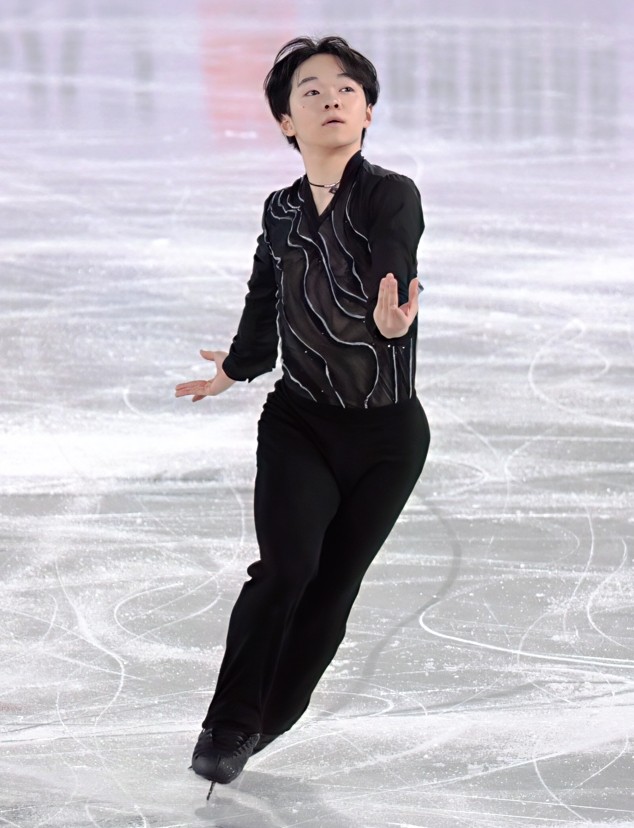
Kagiyama's Quad Flip: Optimizing Takeoff Angle for Maximum Jump Height
Yuma Kagiyama, the prodigious Japanese figure skater, has captivated audiences with his artistry and formidable athleticism. A two-time Olympic medalist and a consistent presence on the international podium, Kagiyama is renowned for his spectacular jumps, particularly the quad flip. While his current execution of this challenging element is already world-class – boasting impressive flight time and flawless rotation – advanced biomechanical analysis reveals a crucial area for potential enhancement: optimizing his takeoff angle. This subtle adjustment, alongside refining his "draw" phase, could unlock even greater heights and solidify his competitive edge, especially considering
Yuma Kagiyama's Height: How His 5'3" Stature Compares to Elite Skaters, which makes his aerial feats all the more remarkable.
Unpacking the Quad Flip: Kagiyama's Aerial Mastery
The quad flip is one of figure skating's most technically demanding and high-scoring jumps. It requires immense power, precision, and courage, involving four full rotations in the air before a clean landing. Yuma Kagiyama performs this jump with notable distinction. Data from his 2024 Four Continents performance showcases a significant flight time of 0.720 seconds – a testament to his explosive power and air sense. His angular velocity during the snap phase, at 24.933 rad/s, is excellent, ensuring his rotations are completed well before landing.
Despite these already outstanding metrics, the quest for perfection in elite sports is unending. Kagiyama, at approximately 155 cm (5'1"), navigates the ice with a compact yet powerful frame. This relatively smaller
Kagiyama Height compared to many of his rivals, like Ilia Malinin (5'9") or Nathan Chen (5'6"), might influence his jump mechanics. While smaller stature can be an advantage for faster rotation due to a more centralized mass, it can also present unique challenges in generating initial vertical lift, making efficient takeoff mechanics even more critical.
The Science of Flight: Deconstructing the Takeoff Angle
At the heart of maximizing jump height lies the physics of projectile motion. When a skater leaves the ice, their body becomes a projectile, influenced by initial velocity and the force of gravity. The angle at which they launch themselves from the ice significantly dictates the trajectory and ultimate height and length of the jump.
Current analysis suggests that during his quad flip takeoff, Kagiyama's body axis forms an angle roughly around 20 degrees relative to the ice. While this produces impressive results, expert biomechanical assessment indicates that an angle within the 13- to 15-degree range would be more optimal and efficient. Why is this seemingly minor adjustment so crucial?
*
Vertical vs. Horizontal Momentum: The takeoff angle determines how the initial kinetic energy is distributed between vertical lift and horizontal travel. A steeper angle (like 20 degrees) might initially propel the skater more "out" than "up."
*
Maximizing Peak Height: An angle closer to the optimal 13-15 degrees ensures a more efficient conversion of forward momentum into vertical velocity at the moment of takeoff. This means more energy is directed upwards, resulting in a higher apex for the jump.
*
Enhanced Rotational Control: A higher jump provides more "air time," not just for display, but for greater margin for error in completing rotations and setting up for a clean landing. Even though Kagiyama's rotation speed is excellent, a higher jump could allow for a more relaxed and controlled final rotation. This potential for higher jumps and better control is precisely what analysts are exploring to
Unlock Yuma Kagiyama's Jump Height Potential: Quad Flip Takeoff Analysis.
Think of it like launching a rocket: too steep, and it expends too much fuel fighting gravity early; too shallow, and it doesn't gain enough altitude. The sweet spot maximizes the vertical component of the initial velocity, leading to greater overall height.
The "Draw" Dilemma: Unlocking Hidden Potential Beyond the Angle
The takeoff angle isn't the only piece of the puzzle. The phase immediately preceding the actual liftoff, often referred to as the "draw" (from the toe-pick engagement until the final push off the ice), is equally critical. The current data suggest that while Kagiyama's flight time and rotation are excellent, "the length of his jump should be longer, showing the ineffectiveness of his draw." This implies that some potential energy is being left on the ice.
An effective draw is characterized by:
*
Powerful Leg Drive: A strong, explosive push through the skating leg and toe-pick, transferring maximum force into the ice.
*
Optimal Body Position: Maintaining a compact, aligned body from toe-pick to takeoff, ensuring no energy is lost through inefficient movements or misalignments.
*
Efficient Energy Transfer: The "snap" and spring from the ice must be powerful and directed precisely.
For a skater of Kagiyama's stature, optimizing the draw becomes even more vital. With a smaller base, generating maximum initial force requires exquisite technique and unparalleled strength. If the draw is not fully effective, it means his incredible flight time is being achieved through sheer power rather than optimal mechanical efficiency. Improving the draw would not only increase the jump's length but also potentially contribute to greater height, as less energy would be "wasted" in the initial acceleration phase.
Strategic Adjustments for Future Success
Implementing these biomechanical insights into Kagiyama's training would involve a multi-faceted approach:
1.
Advanced Biomechanical Analysis: Utilizing high-speed cameras, force plates, and motion capture technology to precisely measure current takeoff angles and force distribution during the draw. This provides concrete data for targeted adjustments.
2.
Targeted Drills: Coaches would design specific drills focusing on altering the takeoff trajectory. This might involve practicing specific entry curves, adjusting the timing of the knee bend and extension, and refining the angle of the body's lean into the jump.
3.
Strength and Conditioning: Enhancing the explosive power in Kagiyama's legs and core would directly benefit the draw phase. Plyometric exercises, targeted jumps, and single-leg strength training could build the necessary power to maximize his push-off from the ice.
4.
Proprioceptive Training: Developing Kagiyama's body awareness to instinctively find and maintain the optimal 13-15 degree angle and an efficient draw. This takes thousands of repetitions and constant feedback.
5.
Mental Fortitude: Elite athletes develop muscle memory. Changing a deeply ingrained movement pattern, even for optimization, requires significant mental resilience and trust in the coaching process.
By fine-tuning his takeoff angle and enhancing the efficiency of his draw, Yuma Kagiyama could transform his already formidable quad flip into an even more dominant weapon. This refinement would lead to visibly higher, longer, and arguably more stable jumps, further cementing his status as one of the sport's greatest aerialists.
Conclusion
Yuma Kagiyama's journey exemplifies the relentless pursuit of perfection in figure skating. While his current quad flip is an astonishing display of athleticism, the scientific analysis points to a clear path for further enhancement. By meticulously optimizing his takeoff angle to the ideal 13-15 degrees and refining the efficiency of his "draw" phase, Kagiyama has the potential to elevate his already exceptional jump height and length. This strategic mechanical adjustment, combined with his incredible talent and dedication, promises to push the boundaries of what's possible in men's figure skating and solidify his place among the sport's all-time greats, proving that even a skater of
Yuma Kagiyama's Height can achieve unparalleled aerial prowess.